Views: 0 Author: Site Editor Publish Time: 2025-12-22 Origin: Site
Custom metal parts drive product performance today. Many teams struggle to choose the right method. CNC Machining offers accuracy and solves key challenges. In this article, you will learn how to select the best manufacturing approach.
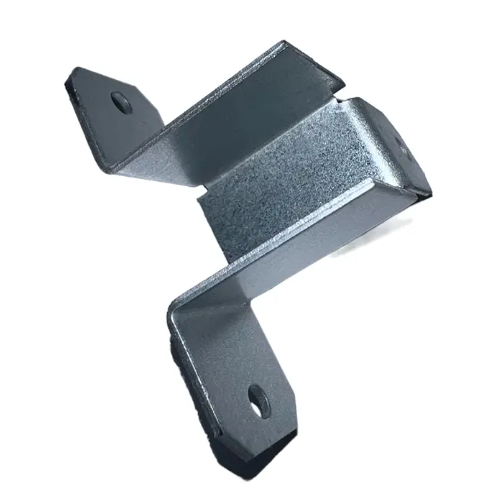
The best manufacturing method depends on what the part must achieve and how it fits into a larger system. Before choosing a process, teams look at a few essential factors that shape cost, performance, and lead time. Tolerance is one of the biggest drivers. If a part must fit precisely with other components, the available manufacturing options narrow quickly. CNC Machining is often selected for this reason, as it supports small tolerances and repeatable accuracy.
Geometry also influences the decision. Parts with pockets, channels, thin walls, or 3D contours may not work with stamping or forging. Casting supports more complex shapes but may require machining afterward to meet dimensional requirements. Production volume is another major factor. Small batches usually favor CNC Machining or metal 3D printing because they do not need expensive tooling. High-volume parts work better with casting or stamping due to lower per-unit cost once tooling exists.
Material selection plays a large role as well. Each metal behaves differently under heat, pressure, and machining conditions. Hard metals demand slower cutting speeds in CNC Machining. Soft metals flow more easily in casting. Required mechanical properties, such as tensile strength or corrosion resistance, further guide the decision. Lead time shapes the process choice too. CNC Machining begins as soon as the digital file is ready, while casting or stamping tools may take weeks.
When all these factors come together, the right process becomes clear. Teams can prioritize performance, speed, or cost depending on what matters most for the final product.
CNC Machining is the leading choice for many custom metal parts. It offers accuracy, flexibility, and a direct path from design to production. Engineers often choose CNC Machining when they need a part that must work on the first try. The digital workflow creates a precise cutting path that mirrors the design model. The result is a consistent, predictable part.
CNC Machining shines when tolerances are tight. Many mechanical assemblies rely on exact fits to function correctly. CNC lathes and mills achieve tolerances that casting or stamping processes cannot match. This makes CNC ideal for aerospace components, medical instruments, robotics joints, automotive mounts, and electronic enclosures.
Another advantage is material freedom. CNC Machining cuts aluminum, stainless steel, brass, copper, titanium, and many specialty alloys. This makes it suitable for parts that must resist heat, stress, or corrosion. It also works well for prototypes and small batches. No tooling means quick changes. Designers can adjust a feature and produce a revised part in the same week.
CNC Machining supports long-tail needs such as replacement parts and customized components. Many businesses rely on CNC to maintain older systems where original parts are not available. The ability to produce consistent CNC parts with minimal setup makes it ideal for high-mix, low-volume production.
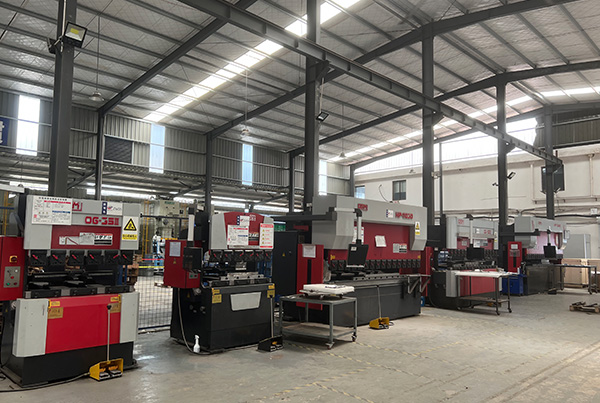
Although CNC Machining is powerful, it is not always the best option. Some projects benefit from alternative processes. Casting is an excellent choice when the part has complex shapes with thick walls or hollow interiors. The liquid metal fills the mold, creating features that would take too long to machine. For high volumes, the cost per part becomes very low.
Forging is best for parts that need high strength. The compression process compresses and aligns the metal’s grain structure, improving fatigue resistance and load capacity. This makes forging ideal for engine components, gears, bolts, and industrial tools. When durability matters more than detailed geometry, forging often beats machining.
Stamping works very well for thin metal parts. Once the tool is ready, stamping presses deliver fast cycle times and low unit cost. Brackets, panels, clips, and structural sheets use this method. Stamping supports high volume and offers high repeatability.
Each method performs best under specific conditions. Understanding the trade-offs helps teams select a process that balances performance and cost.
Process | Best Use Case | Key Advantages | Limitations | Typical Industries |
CNC Machining | Tight-tolerance custom CNC parts | High accuracy, no tooling, flexible materials | Higher cost for long runs | Aerospace, medical, robotics |
Casting | Complex shapes, high volumes | Low cost per unit, supports large parts | Lower precision, needs post-machining | Automotive, heavy equipment |
Forging | High-strength functional parts | Best mechanical strength, long durability | Limited complex geometry | Energy, machinery, engines |
Sheet Metal / Stamping | Lightweight structural components | Very fast, scalable, low unit cost | Requires tooling, limited thickness | Electronics, appliances |
Metal 3D Printing | Prototyping, complex designs | No tooling, supports internal channels | High cost per part, lower speed | Medical, aerospace, R&D |
CNC Machining is a subtractive process driven by computer numerical control. The machine removes material from a solid block using cutting tools. This high level of control produces shapes that match the digital model precisely. Because CNC uses automated inputs, operators do not rely on manual cutting or subjective measurements.
The precision goes beyond simple shapes. CNC Machining can form curved surfaces, angled faces, intricate pockets, or internal features. It achieves excellent surface finishes without heavy polishing. It also handles many metals with consistent results. These qualities make CNC a strong choice for custom parts that require accuracy and stability.
Another strength is repeatability. Once the machine setup is defined, the same tool path can produce identical parts across batches. This is especially valuable for industries that cannot accept variation. CNC also supports multi-step machining, including drilling, tapping, contouring, and threading, in one continuous operation.
In addition to accuracy, CNC Machining offers predictable performance. The process follows the same code each time. Any deviation is easy to detect or correct. This increases confidence in the final product.
CNC Machining contains two primary techniques: milling and turning. Both cut metal, but they do so in different ways. CNC Milling uses a rotating cutting tool and keeps the workpiece still. This allows the machine to remove material from many angles. Milling is ideal for plates, blocks, enclosures, and three-dimensional shapes. Most mechanical housings and precision brackets are milled.
CNC Turning rotates the workpiece while the cutting tool remains fixed. It works well for cylindrical shapes such as shafts, pins, and bushings. Turning offers excellent surface finish and handles round features efficiently. It is often faster and cheaper for round parts.
Many components use both processes. A part may be turned first to create a central shaft, then milled to add keyways, slots, or drilled features. Understanding when each method performs best helps reduce machining time and cost. Choosing the right method also improves accuracy.
CNC Machining cost depends on machining time, material choice, setup work, and order size. Long machining cycles raise cost. Hard metals take more time to cut. Complex geometry increases tool changes and slows production. Raw material cost also matters. A block of stainless steel costs far more than aluminum.
Setup time plays a major role. CNC Machining needs initial programming and fixturing. This cost spreads across the number of units produced. Small batches pay more per part. Larger batches reduce unit cost.
Even with these factors, CNC Machining scales well for low and medium production. It avoids the long lead time and high tooling cost of casting or stamping. If a design change occurs, adjustments are easy to implement. This flexibility supports product development and continuous improvement. Teams can refine parts over multiple versions without starting over.
CNC Machining also fits hybrid workflows. A company might cast a rough blank, then use CNC to refine critical surfaces. This combination reduces machining time while keeping accuracy where it matters.
Factor | Impact on Cost | Impact on CNC Parts Quality | Notes |
Machining Time | Longer cycles increase cost | Higher precision with slower passes | Complex CNC Parts need more time |
Material Type | Hard metals cost more | Affects surface finish and tool wear | Titanium and steel raise machining effort |
Geometry Complexity | More toolpaths raise cost | Enables detailed custom metal parts | Deep pockets + thin walls increase risk |
Setup & Programming | High cost for small batches | Ensures repeatability | Setup spreads over larger quantities |
Batch Size | Larger runs reduce unit price | Improves consistency | Ideal for medium-volume CNC Parts |
Secondary Finishing | Adds processing cost | Improves durability & appearance | Includes anodizing, polishing, coating |
Hybrid Workflow (Casting + CNC) | Reduces machining time | CNC improves critical dimensions | Useful for large metal components |
Casting is one of the oldest metalworking methods. It creates parts by pouring molten metal into a mold. The mold determines the final shape. This process works well for large parts or shapes that involve hollow spaces or organic curves. Casting supports many alloys and is cost-effective for high volumes. However, cast parts often need post-machining to meet tight tolerances.
Forging is the preferred method when strength is more important than geometry. Heat and pressure compress the metal until it takes the desired shape. This process increases durability and helps parts withstand heavy loads. Forged parts last longer and perform better under stress. They may need secondary machining but offer unmatched toughness.
Sheet metal fabrication cuts and bends thin sheets into usable shapes. It is widely used for enclosures, frames, brackets, and structural casings. The process is fast, scalable, and well-suited for moderate or high-volume production. Stamping tools speed up production further. Sheet metal methods are ideal for parts that require light weight and rigidity.
Metal 3D printing builds parts layer by layer using a digital model. This approach allows shapes that traditional methods cannot achieve. Internal channels, lattice structures, and undercuts are possible. Metal printing works well for prototypes, low-volume parts, and custom designs. Material options include aluminum, steel, titanium, and specialty alloys. While expensive per part, it removes the need for tooling and supports rapid iteration.
Selecting the right supplier ensures consistent results. A strong supplier maintains accurate machines and measures parts with reliable inspection tools. Certifications such as ISO 9001 show commitment to quality. Multi-axis CNC machines increase flexibility and reduce setups. Suppliers with broad capabilities handle complex parts more efficiently.
Different metals behave in different ways. Experienced suppliers understand how each metal responds to cutting, forming, or heat. They guide customers to the best choice for durability, strength, and cost. They also advise on finishes such as anodizing, plating, or coating. Good material knowledge reduces problems during production.
Lead time affects how quickly a project moves forward. CNC Machining offers short lead times, while casting or stamping require tooling. Clear RFQs help suppliers deliver accurate quotes. RFQs should include 3D models, drawings, tolerances, quantities, finishes, and material requirements. Better information leads to fewer delays and more predictable outcomes.
Different methods fit different metal parts. CNC Machining delivers the best precision for custom needs. Other processes support strength or volume. Readers should match methods to goals and performance. Suzhou Welden Intelligent Tech Co., Ltd. offers reliable solutions that create value through quality custom manufacturing.
A: Shops need 3D files, tolerances, materials, and quantities to estimate CNC Machining time for accurate CNC Parts pricing.
A: Clear tolerances help shops predict machining steps and ensure CNC Parts meet required dimensions.
A: Material impacts cutting time and tool wear, which shapes CNC Parts cost.
A: Yes, larger batches reduce setup cost and improve CNC Machining efficiency.
A: STEP or IGES files let teams review geometry quickly and plan CNC Machining paths for accurate CNC Parts estimates.
A: Identifying key features guides CNC Machining priorities and ensures CNC Parts meet functional requirements.


