Views: 0 Author: Site Editor Publish Time: 2025-12-17 Origin: Site
Why do CNC Machining quotes slow down so often? Missing details create delays. Shops need clear information to plan cost and timing. In this article, you will learn what helps them quote in hours, not days.
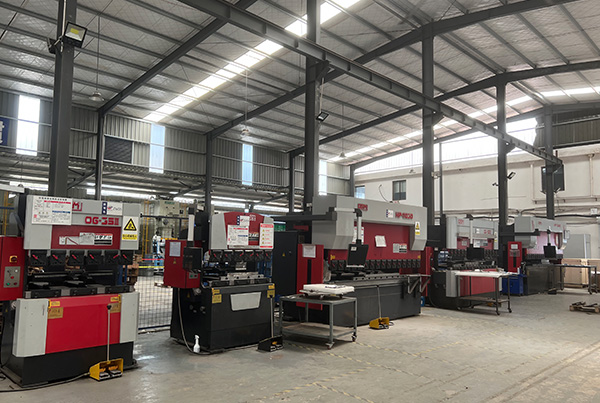
Fast quotes depend on clear and complete RFQ information. CNC Machining teams cannot model cost or lead time unless they understand the part, expectations, and schedule. Every detail guides the estimator toward a confident, accurate quote. Clear data removes guesswork and helps move CNC Parts into planning faster.
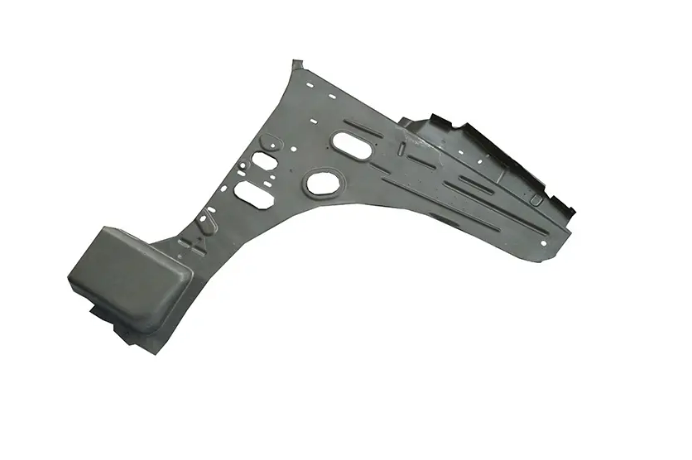
A strong RFQ starts with proper files. A STEP file provides clean, accurate geometry that the shop can use to plan machining paths. It represents true surfaces and edges, which matter for tool selection and programming. STL files do not work well because they use triangle-based meshes instead of real geometry, which distorts dimensions and prevents accurate tolerance analysis.
A 2D PDF drawing is equally important. It contains tolerances, threads, finishes, heat treatment, engraving, and other specifications that rarely appear in a STEP file. Without the PDF, the shop must guess about details that directly affect pricing and production. When both files arrive together, estimators can move immediately into cycle-time modeling and cost evaluation.
File Type | Used For | Advantages | Limitations | Needed for Fast Quotes |
STEP (.step/.stp) | CNC programming & machining | Accurate geometry, ideal for CAM | Large file size | Yes — essential |
STL (.stl) | 3D printing meshes | Easy export, universal | Mesh distortion, no tolerances | No — slows quoting |
PDF Drawing | Manufacturing details | Shows tolerances, threads, finishes | Must match 3D model | Yes — mandatory |
Material selection influences cost, machining difficulty, and stock availability. General descriptions like “aluminum” or “plastic” stop the quoting process because the shop cannot predict material price or cutting behavior. Different aluminum alloys, such as 6061-T6 and 7075-T651, vary in hardness, machinability, and cost. Plastics such as ABS, nylon, and Delrin also differ widely.
Including the exact alloy, grade, and temper helps the estimator choose the correct stock and determine machining strategy. Material certification requirements should also appear in the RFQ when needed. Clear material specifications prevent re-quotes and ensure the correct form—plate, bar, or extrusion—is ordered.
Quantity shapes nearly every aspect of CNC Machining cost. A single part absorbs the entire setup time, while larger batches spread that cost across multiple units. Higher quantities may justify optimized fixtures or faster toolpaths, lowering the per-unit price.
Future usage is also valuable information. If the part will repeat in future orders, the shop can plan tooling and pricing in ways that lower long-term cost. Stating annual usage or expected batch sizes allows the estimator to offer more competitive lot pricing and reliable scheduling.
Tolerances help the shop determine machining time, tool selection, and inspection requirements. When tolerances are missing from the drawing, the estimator must pause evaluation. They cannot model cycle time without knowing whether a feature needs ±0.010", ±0.005", or a tight ±0.001" tolerance. Each level requires different strategies.
Tolerance Level | Typical Range | Machining Difficulty | Inspection Requirement | Cost Impact |
General | ±0.005"–±0.010" | Easy | Basic tools | Low |
Precision | ±0.001"–±0.003" | Medium | CMM | Medium |
High Precision | ≤ ±0.0005" | Hard | Full QC | High |
General tolerances guide non-critical features. Critical tolerances apply to alignment surfaces, hole patterns, bearing fits, and other functional elements. Providing clear tolerance blocks and specific notes helps the shop complete cycle-time modeling quickly and accurately.
Surface finish affects both machining time and downstream operations. Requirements such as as-machined, bead-blasted, polished, or anodized change cost and schedule. Secondary processes—including plating, heat treating, powder coating, and passivation—add additional steps.
Vague terms like “standard finish” slow the quoting process because different industries define “standard” differently. Each finish requires specific preparation and coordination with external vendors. Clear descriptions help the shop confirm capability and estimate turnaround time.
Lead time determines how the shop schedules machine capacity and labor. “ASAP” does not provide useful information. A defined date helps the estimator assign priority and evaluate whether rush production is needed. Rush orders may require overtime, rescheduling, or expedited material sourcing.
A clear deadline also helps the shop manage inspection capacity and secondary processes. When expectations match realistic machining windows, RFQs move through the pipeline smoothly and predictably.
Functional context helps the machinist understand how the part interacts with the larger assembly. With context, the shop can recommend more suitable materials, finishes, or tolerance strategies. For example, vibration-sensitive assemblies may require tighter flatness, while outdoor components may need corrosion-resistant coatings.
Sharing the part’s purpose prevents costly design revisions and supports better manufacturability. When machinists understand the environment and functional role, they can optimize both production and durability.
Missing details slow quotes far more often than complex geometry. Estimators must stop reviewing the part when critical information is absent. Each missing detail creates uncertainty that leads to follow-up emails and delays. Complete RFQs enter the pricing workflow immediately, while incomplete RFQs sit waiting for clarification.
Gaps often include missing tolerances, unknown materials, unspecified quantities, absent finishes, or missing PDFs. Shops cannot assume any of these elements because incorrect assumptions produce flawed pricing. When essential information is missing, the quote cannot proceed.
Ambiguous terms like “any plastic,” “any aluminum,” or “standard tolerance” make accurate quoting impossible. Each material varies in cost and machinability. Tolerance expectations differ between industries. These unclear notes force estimators to guess and increase the risk of mispricing. Clarity reduces uncertainty and speeds up the quoting process.
When drawings lack hole depths, thread callouts, finish notes, or other functional details, the estimator must ask questions before continuing. Each message adds hours or days, especially when teams operate across time zones. Complete drawings eliminate these interruptions and allow the estimator to complete the cost model quickly.
Shops follow structured processes when evaluating RFQs. Understanding these steps helps you prepare requests that move through the system quickly. Estimators perform technical, financial, and scheduling reviews to ensure accurate quotes.
The first review checks for essential RFQ elements: STEP file, 2D PDF, material, tolerance block, quantity, surface finish, and deadline. When all are present, the estimator proceeds to machining strategy. When any are missing, evaluation stops until clarification arrives.
Tolerances influence cutting speeds, tool choices, inspection methods, and overall cycle time. Harder materials increase tool wear and require slower speeds. Estimators depend on both details to forecast machining time accurately. Missing or unclear specifications slow modeling and extend quote turnaround.
Automated quoting systems quickly classify geometry and detect missing details. They calculate estimated cycle time using predefined libraries, enabling faster turnaround. Manual workflows rely on human evaluation, which occurs between ongoing production tasks. Complete RFQs benefit both systems, but automation naturally responds faster.
Providing both prototype and production quantities helps the shop plan more effectively from the start. When you share a small-run number for early testing and a larger volume for future production, the estimator can choose the best tools, fixtures, and machining strategies for each stage. Prototype parts often require flexible setups with faster turnaround, while production runs benefit from optimized toolpaths and dedicated fixtures that reduce cycle time.
This information also helps the shop plan material purchasing and machine scheduling more accurately. Knowing that a larger order may follow allows them to secure stock, negotiate better material prices, and reserve capacity on the production floor. It also lets them offer tiered pricing, which shows how the cost per part will decrease as the quantity increases.
By giving both numbers in the RFQ, you help the shop prepare for your full project lifecycle and receive more accurate, stable, and cost-effective quotes.
When parts belong to the same assembly, sending them together helps the shop evaluate shared processes. This may reduce setup time and create more efficient production plans.
If you require material certifications, ISO standards, or traceability, mention it at the start. These requirements influence inspection, documentation, and sometimes material selection.
Clear naming prevents confusion between revisions and simplifies internal communication. It also reduces the risk of machining outdated files.
A complete RFQ package gives the estimator everything needed to begin cost modeling immediately. It reduces guesswork and supports accurate pricing.
1. STEP file
2. 2D drawing with tolerances
3. Exact material grade and temper
4. Required quantity
5. Surface finish or secondary process
6. Deadline or delivery target
7. Application or functional description
RFQ Item | Why It Matters | What Happens If Missing |
STEP File | Defines geometry | Shop cannot model machining |
2D Drawing | Shows tolerances & threads | Quote becomes inaccurate |
Material Grade | Affects cost & tool wear | Quote halts |
Quantity | Determines cost structure | Cycle time unknown |
Surface Finish | Impacts processing steps | Lead time changes |
Deadline | Controls scheduling | Cannot prioritize |
Application Info | Ensures manufacturability | Risk of redesign |
A simple checklist helps ensure accuracy:
Correct CAD file format
Defined material
Clear tolerance block
Thread specifications
Finish notes
Quantity and deadline
Relevant functional notes
Complete packages prevent delays caused by missing information. They allow shops to move directly into machining strategy and scheduling. This lowers the risk of mispricing, reduces miscommunication, and improves on-time delivery.
Red flags include delayed responses, vague communication, or lack of structured quoting processes. Shops that avoid questions may be guessing instead of evaluating.
Shops that request details about material, tolerances, finish, quantity, or deadlines demonstrate strong internal processes. These questions show they aim for accuracy, not shortcuts.
Reliable shops clarify uncertainties to prevent rework. They aim to deliver CNC Parts that meet expectations without revision. Shops that quote instantly without questions may overlook critical details, leading to errors later.
Clear and complete RFQs help CNC Machining teams quote faster. Accurate files, materials, tolerances, finishes, quantities, and deadlines reduce delays and improve pricing. With full information, shops deliver reliable quotes within 24–48 hours. Suzhou Welden Intelligent Tech Co., Ltd. supports this process by providing advanced machining services that add value through speed and precision.
A: They need files, material, tolerances, finish, and quantity so CNC Machining teams can price CNC Parts quickly.
A: Without a PDF and STEP file, CNC Machining shops cannot review key details or evaluate CNC Parts accurately.
A: Clear quantities help shops plan setup and cycle time, allowing faster pricing for CNC Parts.
A: CNC Machining shops must know the exact alloy to predict cost and machining time for CNC Parts.
A: Yes. Finish requirements change machining steps and secondary processes, which influence CNC Parts scheduling.
A: A defined deadline helps CNC Machining shops prioritize work and deliver accurate timelines for CNC Parts.


